
Everything You Need to Know About Yoruba Wedding Traditions

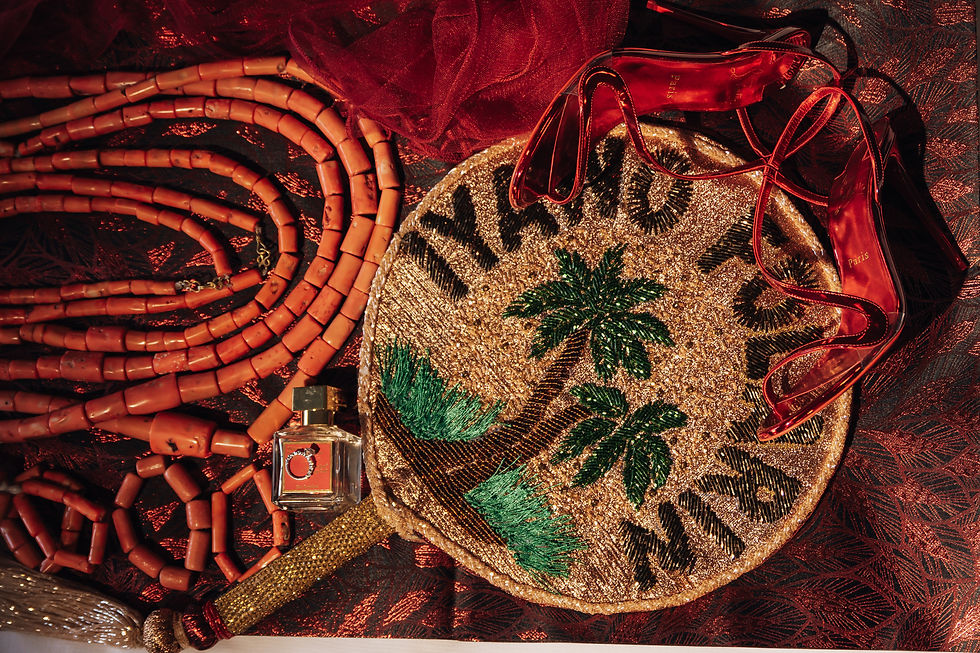
POV you just got invited to a Yoruba wedding, you're super excited and can't wait to experience this special day with the couple but you don't quite know what to expect? You've come to the right place! Here are a few things to note about Yoruba weddings so you can look like a pro at the next "Trad".
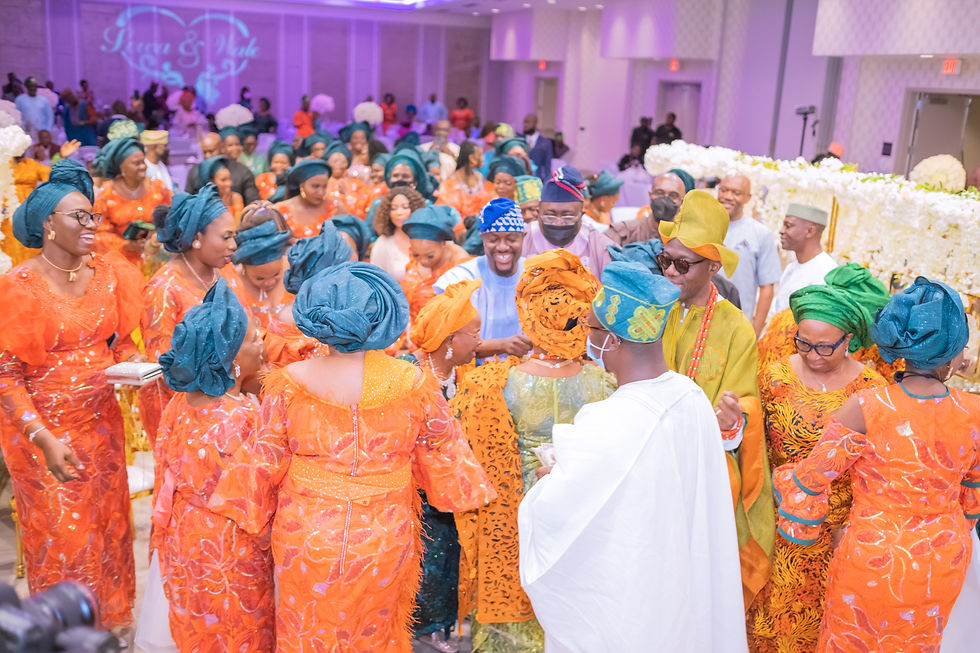
Who are the Yorubas?
The Yorubas are a major ethnic group found in West Africa concentrated mostly in the southwestern region of Nigeria. They make up one of the three largest ethnic groups in Nigeria with over 40 million people. A lot of Yoruba culture such as the music, attire, and dance can be seen in many Nigerian events and around the world. Their culture is rich, vibrant, and colorful, and they LOVE a good party!!
SO what to expect? Here are a few highlights of what you might witness:
Entrances/Introductions
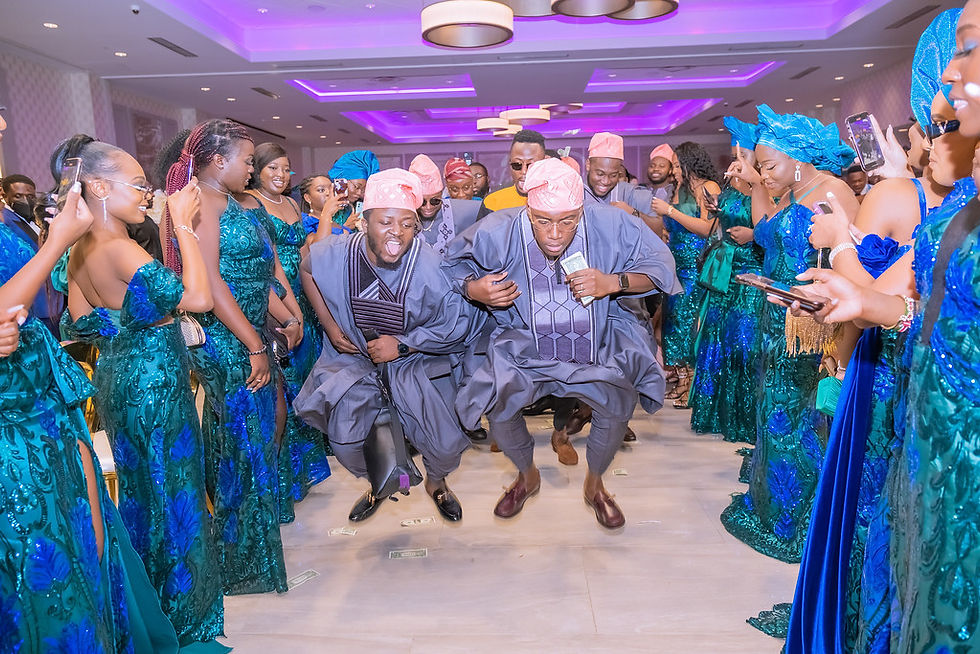
There are multiple dance entrances at the traditional wedding. Both the Bride’s family and the Groom’s family have an entrance led by the parents in front flanked by other family members and well-wishers who dance in celebration from the entrance of the ballroom all the way to the middle of the dancefloor. Don't be surprised if half the room gets up to dance with whichever family side they represent. It's a common occurrence with most Nigerian cultures. It shows that the guests support them and happy to celebrate along with the families.
Groom’s Entrance
The Groom is greeted at the door by an Alaga or the MC, who asks his name and purpose. He responds by stating he is here to ask for his Bride’s hand in marriage. The Groom along with his male friends, siblings, cousins wait at the entrance to the ballroom following cues from the Alaga who guides them throughout the ceremony.
One of such cues will be to "drop" money into the Alaga's bowl before they enter the ballroom. There is no particular set amount, but the groom and his friends are expected to put money in the bowl before they can proceed. The Groom and posse are expected to place money in the Alaga’s bowl which is symbolic, the exact amount is arbitrary. All monies usually are in denominations of singles as it is just a symbolic token amount.
After the money has been placed in the bowl the Alaga allows the troupe to come into the main hall, they of course do so dancing. This is not a choreographed dance, you will see a lot of different moves on the floor as each one showcases their dance skills! And while the Groom is approaching the middle of the dance floor his friends typically "spray" money on him and will do so periodically whenever he’s on the dancefloor. P.s. money spraying happens whenever the parents are dancing or the couple (either together or singularly).
The Greeting and Prostration
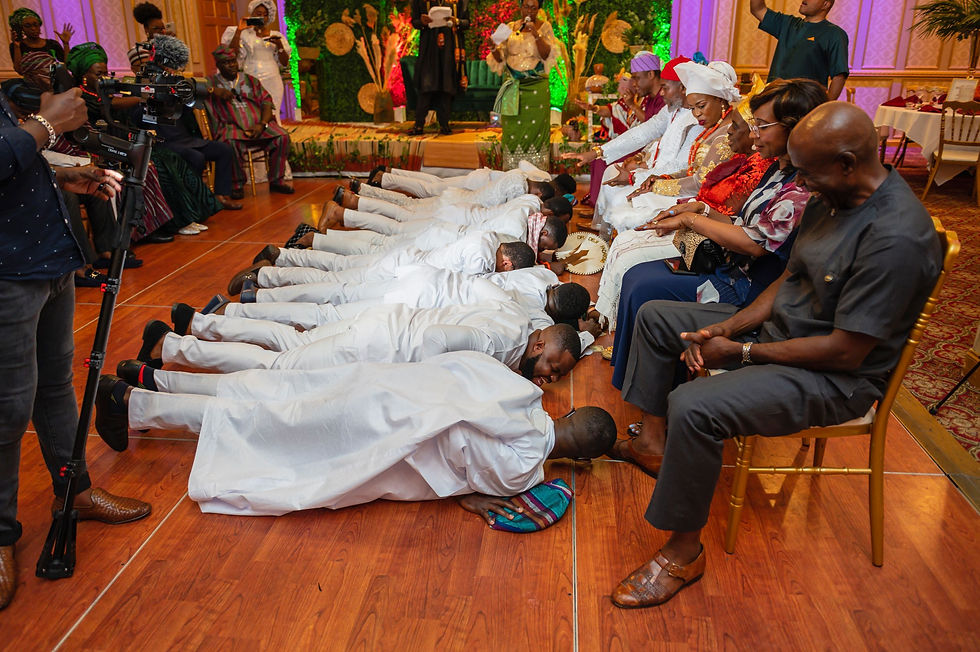
In Yoruba culture women greet elders by curtsying or kneeling, while men prostrate or lie face down on the floor. While this custom is not fully practiced in modern day daily interactions, at weddings there is an expectation that the Groom along with his groomsmen and friends who accompany him (his posse) will be prostrating fully on the floor as a sign of respect to both his family and hers.
Bride’s Entrance
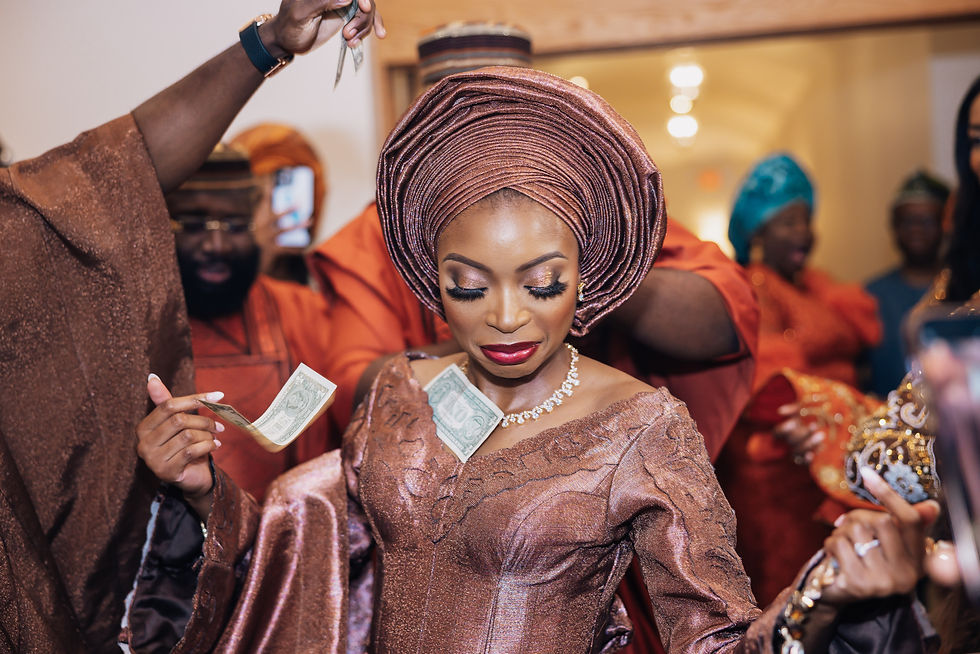
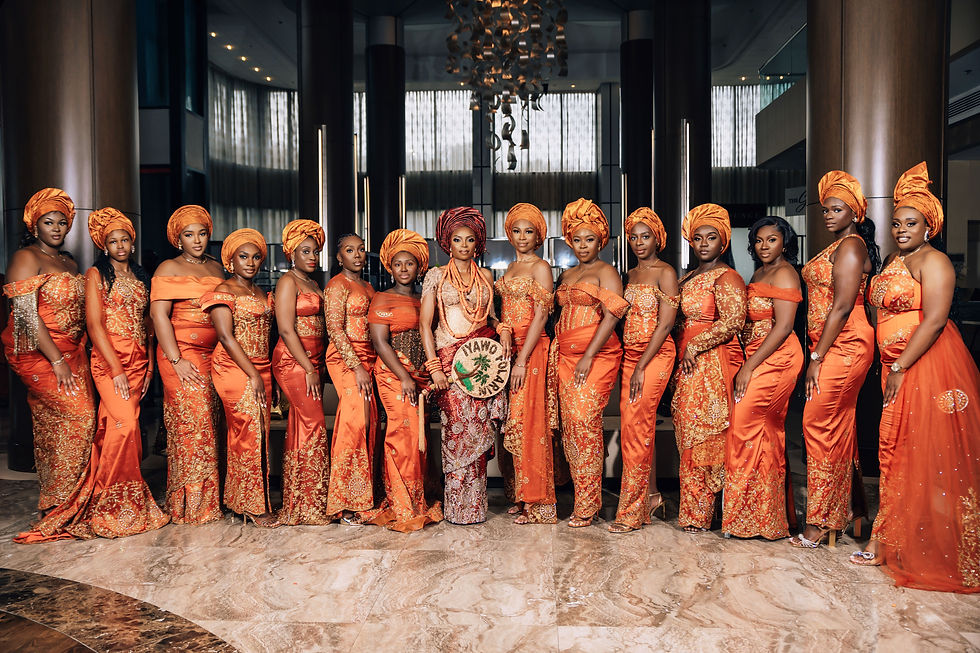
The Bride comes into the room veiled, dancing in with her female siblings and bridesmaids, other young ladies too may join her who are not on the official bridal party. They dance to where the families are seated, she greets them and then goes to the where the Groom is seated to put a fila (traditional Yoruba men’s cap) on his head which symbolizes that she has chosen him as her husband.
Every aspect of the wedding is orchestrated by the Alaga. She tells the core family members where to sit, she guides the couple on every step and cues them on each aspect of the formal wedding ceremony.
Spraying Money (money dance):
It is customary that whenever the celebrants such as the parents or the couple together, or separately are on the dancefloor, guests will join them to dance with them as well as get close enough to “spray” money on them, it’ usually done one bill at a time and is a show of support and jubilation.
Eru Iyawo (The Groom’s Family gifts to the Bride)
In Yoruba culture it is customary for the Groom’s family to present gifts to the Bride on the wedding day. The Bride provides a list of items she wants ahead of time to the Groom’s family who then purchase, wrap, and display the gifts beautifully as part of the décor setup for the event. It may include food items, cookies, drinks, jewelry, luggage, shoes, apparel, and much more.
Dancing:
Nigerians love to dance! Yoruba culture has influenced most of the popular afrobeat tunes and most Nigerian events will feature mainly Nigerian songs. It’s very easy to get on the dance floor to the catchy tunes!
Food:
Nigerian dishes rich in flavor and bold in taste. Be ready to indulge your tastebuds in an extra kick of spice thanks to the liberal use of scotch bonnet peppers:) The most common food you will find at any Nigerian wedding is Jollof rice commonly eaten in West Africa. It is made of long-grain rice, bell peppers, scotch bonnet, onions, oil, and spices such as curry, seasoning, thyme, bay leaves, and chicken/beef broth.
Guests:
Nigerian and fashion are an indomitable pair! So dress to impress!! Don't worry about outshining the Bride, she wants her guests at their best so do not hold back on your look. 99% of Nigerian guests have their outfits custom made in Nigeria or at a Nigerian tailor. Expect to spend somewhere between about $250 or more on one of these beautifully tailored outfits.
Comments